
The Driller
search
cart
facebook twitter linkedin youtube
  • Sign In
  • Create Account
  • Sign Out
  • My Account
The Driller
  • NEWS
    • Water
    • Geothermal
    • Construction
    • Environmental
    • Mining
    • All Industry News
  • CLASSIFIEDS
  • EQUIPMENT
    • Rigs & Heavy Equipment
    • Consumables
    • Pumps
    • Featured Products
  • SAFETY
  • VIDEOS
    • Newscast
    • Drill Talks
    • Ask Brock
    • Emerging Drillers
  • PODCASTS
    • The Newscast
    • The DRILLERcast
  • EDUCATION
    • Drilling Business Insights
    • Conferences & Demo Days
    • Reference Desk
    • Sponsored Insights
  • SOURCEBOOK
  • SUBMIT
    • Driller E.G.O. Award
  • ABOUT
    • Contact
    • Advertise
  • SIGN UP
Drilling Industry NewsEnvironmental MonitoringWater

Invasive Scud Is Threatening the Great Lakes

Pollution Might Be Helping to Keep It Back
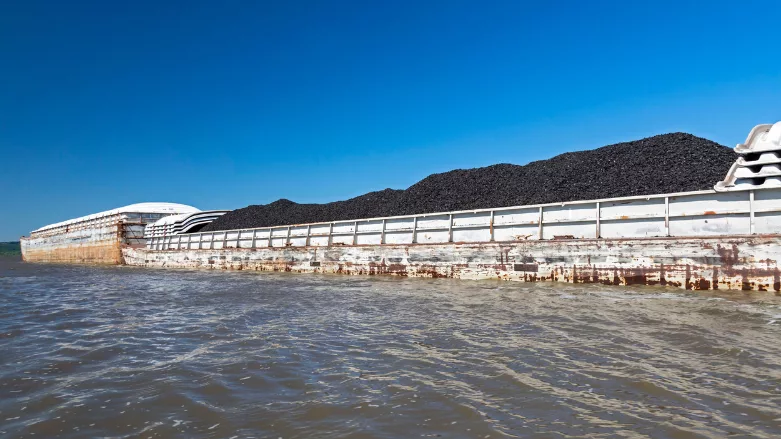
By K.R. Callaway
An image of pollution in a lake

Credit: Jim West/UCG/Universal Images Group via Getty Images

December 16, 2025

This article is courtesy of Inside Climate News, written by K.R. Callaway.

Through the murky waters of the Illinois River, scud have been moving steadily toward Lake Michigan. Scientists suggest the tiny crustaceans, an invasive species known as Apocorophium lacustre, pose a big threat to the lake’s ecosystem—but so far, pollution has hindered their spread.

As water quality in the area improves, following decades of work to clean up the Illinois River and other bodies of water near Chicago, authors of a recent study analyzing barriers preventing the invasion of A. lacustre, published in the journal Biological Invasions, suggest additional techniques for managing the species might be necessary.

“For us as biologists, obviously, water quality getting better is the best thing we could possibly hear,” said John Bieber, co-author of the study and a biologist at Loyola University Chicago. “But if we see that the water quality is good enough now for [scud] to be able to work their way closer to Lake Michigan, then that definitely does become a more pressing concern.”

Scud is a general term for the small crustaceans common in aquatic environments around the world. While there are some varieties of scud native to Lake Michigan and Illinois’ waterways, A. lacustre is an invasive species. From its native range on the Atlantic coast, scientists believe the species made its way up the Mississippi River and into the Illinois River by 2003. They are worried, if it reaches Lake Michigan, it could replace vital native species at the bottom of the food chain, with cascading effects on the diets of other aquatic species—all the way up the chain to salmon and other game fish.

A. lacustre has not yet been observed upstream of the Dresden Island Pool, the waters behind a lock and dam system that guides boats toward Chicago and Lake Michigan, approximately 100 river kilometers away. To understand why, the study authors conducted experiments to see how different water conditions changed the species’ movement and behavior.

First, researchers tested how scud reacted in waters from the Chicago Sanitary and Ship Canal (CSSC), a waterway containing treated and untreated sewage, as well as runoff from the industrialized city. About 35 percent of A. lacustre exposed to this water did not survive, and researchers suggest in-situ scud would likely choose to stay downstream in less polluted waters, if given the chance.

Researchers also tested how two invasive species barriers might impact the species’ spread. They simulated the CSSC’s “electric fence” system, which has been in operation since 2002, creating an electric field in the water to prevent larger invasive species, such as carp, from breaching Lake Michigan. However, researchers found this electric barrier caused little change in scud’s behavior, except at 300 percent and 400 percent of the electric field strength currently used in the CSSC. 

Similarly, when researchers simulated a proposed CO2 barrier—which would increase CO2 levels in the CSSC to prevent invasive species from passing through—they found impacting scud would require much higher levels of added CO2 than is currently allowed by the U.S. Environmental Protection Agency.

“There hasn’t been a lot of work with scud,” Bieber explained. “This is a first step effort to be able to understand how an amphipod, like scud, can respond.”

While research of these organisms is still in its early days, their small size means their spread is difficult to detect and time is of the essence for learning more about them. Brandon Harris, a large river fisheries ecologist at the Illinois Natural History Survey, notes these tiny creatures can travel, relatively undetected, across large distances by hitching rides on vessel hulls or in ballast water.

To prevent scud and other invasive species from traveling this way, the United States and Canada have implemented a variety of regulations governing how and where trans-oceanic ships should empty their ballast water, but it’s still possible for small species to slip through.

“It’s a lot harder to see a small amphipod than it is, maybe, a fish,” said Harris, who was not involved in the study. “When they’re small like that, they pose a lot more issues.”

These issues are especially salient as the waterways around Chicago are finally getting cleaner after decades of restoration efforts. In late September, for the first time in nearly a century, the Chicago River hosted its first organized swim after the once-toxic waters were deemed safe and clean.

Downstream from the city, similar strides have been made. Since civil engineers reversed the flow of the Chicago River in 1900, sending the city’s polluted waters away from Lake Michigan, the Illinois River has faced high levels of pollution. Over time, local cleanups and regulatory changes, such as the Clean Water Act of 1972, have helped improve the health of the river and its ecosystems.

“You’re technically able to eat a fish that was born in the Chicago River, and that is an incredible win,” said Lindsay Keeney, chief program officer for conservation and agriculture at the Illinois Environmental Council. “But the win is the pattern … it’s going to continue to get healthier.”

Although Keeney acknowledges invasive species thrive in the same clean water that native species do, she explains pollution is “not something that we want to rely on.” Instead, the most effective strategy for keeping invasive species away is supporting healthy, resilient ecosystems with natural predators and abundant prey.

By continuing to clean the waterways and protecting regulatory frameworks—at the local, state, and federal levels—that mitigate pollution, scientists hope ecosystems will be robust and healthy enough to manage the threats posed by scud. And while these cleanups are underway, scientists are carrying on with their work to learn about scud, and what might stop them.

“While it’s unrealistic to kind of be able to create a catch all system, being able to identify and being able to show the different ways that these barriers are able to impact [scud], I feel is a critical management effort,” Bieber said.

KEYWORDS: climate change government policy

Share This Story

Looking for a reprint of this article?
From high-res PDFs to custom plaques, order your copy today!
Recommended Content

JOIN TODAY
to unlock your recommendations.

Already have an account? Sign In

  • geotechnical drilling rig

    6 Onsite Phrases Environmental Drillers Hate

    Here are six phrases that highlight common frustrations...
    Environmental Monitoring
    By: Jeff Garby
  • Pipe Stuck? Common Causes and Solutions for Drillers

    If you have drilled for any length of time, sooner or...
    Oil & Gas Drilling
  • deep water well

    Selecting and Sizing Submersible Pump Cable

    This article helps pump installers and servicers decide...
    Pumps
    By: Bob Pelikan
You must login or register in order to post a comment.

Report Abusive Comment

Manage My Account
  • Newsletters
  • Online Registration
  • Subscription Customer Service
  • Manage My Preferences

More Videos

Sponsored Content

Sponsored Content is a special paid section where industry companies provide high quality, objective, non-commercial content around topics of interest to the The Driller audience. All Sponsored Content is supplied by the advertising company and any opinions expressed in this article are those of the author and not necessarily reflect the views of The Driller or its parent company, BNP Media. Interested in participating in our Sponsored Content section? Contact your local rep!

close
  • truck-mounted 3100GT drilling rig
    Sponsored byGeoprobe

    Equipment That Helps Solve Your Workforce Problem

  • Star Iron Works  sales team
    Sponsored byStar Iron Works, Inc.

    Using the Experience of Long-Term Employees to pass on Dedication, Tradition, and Legacy

Popular Stories

The Driller Newscast episode 155: Festivus, the True Drilling Holiday

Festivus, the True Drilling Holiday

Drillmax DM 250 drilling rig

Expand Potential Talent Pool Adding Updated, Non-CDL Equipment

An image of Jim Beath on an Orange background

A Christmas Story - or Something of the Sort

The DRILLER logo CLASSIFIEDS

COMPRESSORS

EAST WEST MACHINERY & DRILLING IS BUYING AND SELLING AIR COMPRESSORS, AIR BOOSTERS, AIR ENDS & PARTS
Company: East West Machinery

DRILL RIGS

LOOKING FOR LATE MODEL TOPHEADS & DRILLTECH D25'S
Company: Spikes’s Rig Sales

DRILL RIG PARTS

MEETING DRILLERS NEEDS AROUND THE WORLD
Company: East West Machinery

ELEVATORS

SEMCO INC. PIPE ELEVATORS
Company: Semco Inc.

GROUTERS

GROUTING EQUIPMENT - GROUT PUMPS & GROUT HOSE REELS
Company: Geo-Loop Inc.

PUMP HOISTS

SEMCO INC. - BASIC PUMP HOISTS
Company: Semco Inc.

WELL PACKERS

LANSAS PRODUCTS - INFLATABLE WELL PACKERS
Company: Vanderlans Lansas Products

WELL SCREENS

WELL SCREENS & SLOTTED PIPE
Company: Alloy Screen Works

Products

Water Quality Engineering: Physical / Chemical Treatment Processes

By carefully explaining both the underlying theory and the underlying mathematics, this text enables readers to fully grasp the fundamentals of physical and chemical treatment processes for water and wastewater.

See More Products

The Driller EGO award - Tell Us Who's Making An Impact in the Field

Related Articles

  • The Driller Newscast episode 62: WOTUS Challenges, PFAS and the Great Lakes

    WOTUS Challenges, PFAS and the Great Lakes

    See More
  • An image of the Great Lakes shoreline

    EPA’s Floating Lab Sets Sail for Another Great Lakes Summer Mission

    See More
  • Another Solid Great Lakes Show

    See More

Related Products

See More Products
  • In Too Deep: BP and the Drilling Race That Took it Down

  • Water and Wastewater Treatment: A Guide for the Nonengineering Professional, Second Edition

  • Audel Water Well Pumps and Systems Mini-Ref

See More Products

Related Directories

  • Shallow Draft Elevating Boats Inc.

    Shallow Draft is the leader in over the water barge drilling in two feet to 40 feet. Highway truckable to any location. Ocean freightable to any destination. Unblemished record of success since 1987! Shallow Draft IS THE GO TO COMPANY in the industry for tough over the water projects.
  • DSI - Drillers Service

    DSI is a wholesaler to the water industry, including water well, wastewater, turf, and industrial products. Serving the Southeast region of the United States, DSI's goal is to distribute products of superior quality at a competitive price, while providing the added value of unrivaled support and service.
  • Headwater Wholesale

    Headwater Wholesale is a distributor to the groundwater industry focused on providing contractors with unparalleled quality, service, and support. With locations throughout the central United States, contractors trust Headwater Wholesale to have the supplies they need in-stock and ready for the job site. At Headwater Wholesale our goal is to be your first choice for all your water well, irrigation, water well drilling, water treatment and wastewater needs.
×

Dig deeper into the drilling and water supply industry!

Build your knowledge with The Driller, covering the people, equipment and technologies across drilling markets.

SIGN UP NOW
  • RESOURCES
    • Advertise
    • Contact Us
    • Directories
    • Store
    • Want More
    • Classifieds
  • SIGN UP TODAY
    • Create Account
    • Newsletters
    • Customer Service
    • Manage Preferences
  • SERVICES
    • Marketing Services
    • Reprints
    • Market Research
    • List Rental
    • Survey/Respondent Access
  • STAY CONNECTED
    • LinkedIn
    • Facebook
    • YouTube
    • X (Twitter)
  • PRIVACY
    • PRIVACY POLICY
    • TERMS & CONDITIONS
    • DO NOT SELL MY PERSONAL INFORMATION
    • PRIVACY REQUEST
    • ACCESSIBILITY

Copyright ©2026. All Rights Reserved BNP Media.

Design, CMS, Hosting & Web Development :: ePublishing