As AI Infrastructure Expands, Demand for Gold and Silver Tightens Supply Chains
These materials connect nearly every chip, circuit board and data center worldwide

Image via Ravitaliy from Getty Images Pro
Artificial intelligence may be driven by software, but its physical foundation depends on metals like gold and silver. These materials connect nearly every chip, circuit board and data center worldwide, and their supply is tightening as industrial demand accelerates.
Silver remains a key conductor in photovoltaic cells and high-speed electronics, while gold continues to be used for corrosion-resistant connectors, bonding wires and precision components. According to the World Gold Council, technology-related gold demand reached about 326 tonnes in 2024, a 7 percent year-over-year increase, totaling more than 10.5 million ounces used in electronics and industrial systems. Analysts expect this demand to rise as AI-optimized infrastructure expands globally.
Within this environment, ESGold Corp. is positioning its gold-silver development plans to meet near-term supply needs. The company is advancing a fully funded and fully permitted project in Quebec designed to begin production in 2026. ESGold says it aims to align its strategy with the needs of producers and technology companies building next-generation infrastructure. The company notes that its efforts are independent of any partnerships or investment advice.
Metals Become a Bottleneck for AI
The rapid scale-up of data centers is pushing the physical limits of supply chains. Goldman Sachs Research projects that electricity consumption from data centers could rise as much as 165 percent by 2030 compared with 2023 levels. Every server, switch and accelerator relies on components containing gold or silver, and the expansion of AI hardware has made these metals more central to manufacturing.
Recent market stresses illustrate the challenge. In October 2025, Reuters reported a silver shortage in London significant enough to require airlifting bars to meet demand, resulting in sharp increases in lease rates before the market stabilized. At the same time, utilities across the United States have begun updating capacity planning to account for rising electricity use tied to AI development.
Broader electronics and renewable energy trends are also contributing to demand. The Silver Institute recorded industrial silver consumption at 680.5 million ounces in 2024, the fourth straight year of a structural deficit. Smartphones alone require small but consistent quantities of gold, multiplied across about 1.4 billion units produced annually. When combined with demand from servers, networking equipment and solar applications, the pressure on supply grows quickly.
ESGold’s Near-Term Development Path
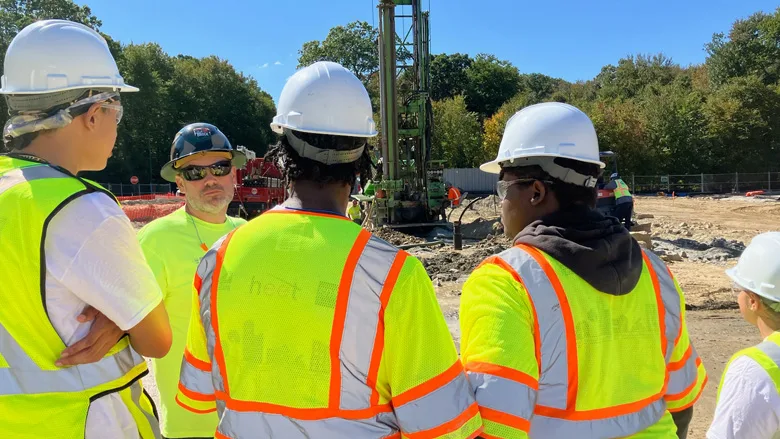
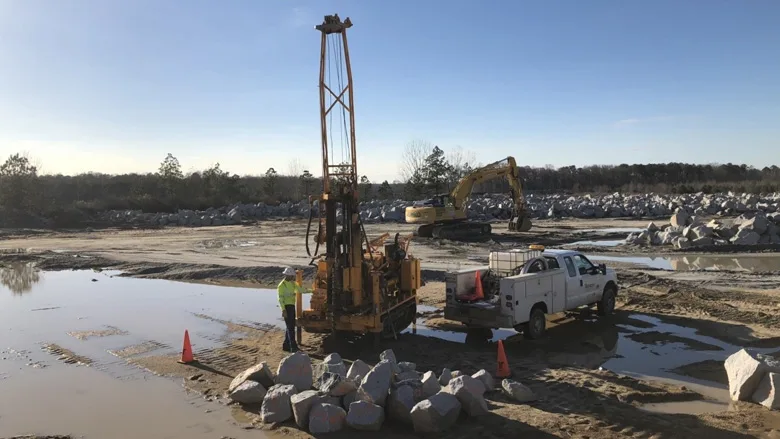
ESGold’s flagship Montauban Gold-Silver Project is fully permitted and financed through construction, with commissioning projected for 2025 and production expected in 2026. The company’s approach centers on reprocessing historical tailings rather than developing a traditional greenfield mine. By working with known, previously mined material, ESGold avoids many of the uncertainties of exploration-heavy projects and shortens the timeline to cash flow.
Company updates have detailed the installation of a Merrill-Crowe recovery system and an on-site lab and gold room, indicating that construction is progressing. ESGold has also stated it secured full funding for the project’s buildout and for a parallel validation initiative in Colombia.
The project’s updated Preliminary Economic Assessment outlines a roughly 60 percent after-tax internal rate of return, a payback period of under two years and an after-tax net present value above C$24 million at a 5 percent discount rate. While PEAs are preliminary by nature, the company says the metrics demonstrate potential for early revenue and reinvestment into exploration.
Reprocessing tailings allows ESGold to generate revenue while also contributing to land restoration. The company continues to model deeper structures across the Montauban district using historic and geophysical data. Technical studies suggest continuous formations extending to about 1,200 meters, creating potential for additional mineralization beyond the known tailings resource.
This dual approach is intended to balance early production with longer-term discovery. ESGold has described future expansion plans that include a possible “hub and spoke” processing model using both tailings and new feed sources.
Industrial users are increasingly focused on securing materials needed for AI, electric vehicles and renewable technologies. With consecutive silver deficits and rising gold use in electronics, companies that bring near-term supply to market may have an advantage as demand increases.
Technology and energy companies are investing heavily in new infrastructure. Meta plans to build a 1.2-million-square-foot data center in El Paso optimized for AI workloads, representing more than $1.5 billion in investment. Tesla released its Master Plan Part IV outlining goals to integrate AI more deeply into its manufacturing and product development. NVIDIA and Oracle announced a collaboration to build the U.S. Department of Energy’s largest AI supercomputer using NVIDIA’s Blackwell GPUs. Taiwan Semiconductor Manufacturing revealed its A14 process technology, expected to enter production in 2028, aimed at enabling faster and more efficient AI hardware.
These developments illustrate how the growth of AI is tied directly to physical materials. As companies expand capacity, the supply of gold and silver has become a central part of the discussion, pushing resource development and secure supply chains to the forefront.
Looking for a reprint of this article?
From high-res PDFs to custom plaques, order your copy today!