New WOTUS Proposal, Drawing Strong Support and Debate
The EPA and the U.S. Army Corps of Engineers have released a proposed rule to redefine “waters of the United States”
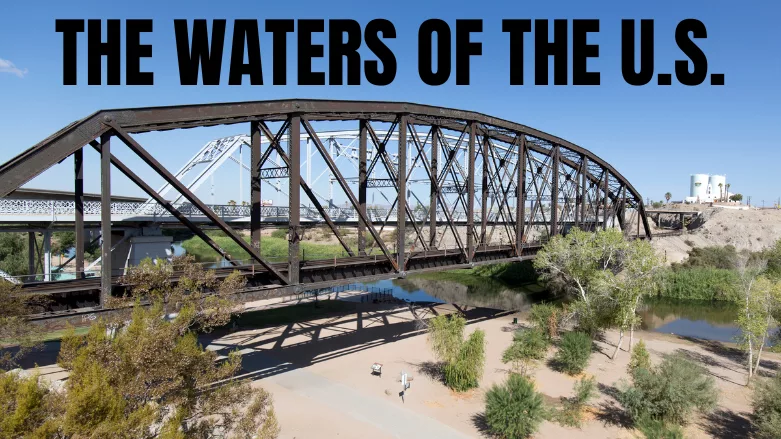
Image via Janusz Pienkowski from Getty Images
The U.S. Environmental Protection Agency and the U.S. Army Corps of Engineers have released a proposed rule to redefine “waters of the United States” (WOTUS) under the Clean Water Act, aiming to provide a more “clear” and “durable” standard following the Supreme Court’s 2023 decision in Sackett v. EPA. The announcement was made Monday at EPA headquarters by Administrator Lee Zeldin and Assistant Secretary of the Army for Civil Works Adam Telle, with more than 100 state and industry representatives in attendance.
The proposal marks the latest shift in a long-running regulatory debate that has spanned multiple administrations, with each issuing its own interpretation of federal jurisdiction over wetlands, streams, and other waters. Supporters of the new proposal say the definition will reduce uncertainty for landowners and align federal oversight with the Supreme Court’s narrower reading of the law. Environmental groups have not yet issued formal responses, but have historically warned that significantly narrowing federal jurisdiction could leave some waterways more vulnerable to pollution and weaken national water protections.
Early public reactions came largely from Republican elected officials, agricultural groups, construction industries, and energy-sector associations—all of whom framed the proposal as a corrective to what they consider years of regulatory overreach.
Assistant Secretary Adam Telle said previous versions of WOTUS “unduly burdened the American people and undermined our nation’s economic competitiveness,” arguing that the new definition “follows the law as affirmed by the Supreme Court.”
Agriculture Secretary Brooke Rollins called the proposal “a victory for rural America,” while Nebraska Gov. Jim Pillen described past iterations of WOTUS as “vast government overreach.”
Several governors, senators, and representatives—primarily from farm-heavy or energy-producing states—welcomed the proposal as a way to reduce compliance challenges for farmers, ranchers, landowners, and developers. Iowa Gov. Kim Reynolds called the update “great news for Iowa farmers and landowners,” and Sen. Shelley Moore Capito (R-WV) said the proposal “right-sizes federal jurisdiction” in line with the Sackett ruling.
Industry groups across agriculture, mining, construction, housing, chemicals, forestry, and manufacturing echoed similar themes—predictability, reduced permitting delays, and clearer lines between state and federal jurisdiction. Many noted that frequent changes to WOTUS over the past decade have created uncertainty for long-term planning. The American Farm Bureau Federation, American Chemistry Council, National Association of Home Builders, and American Mining Association were among those expressing initial support.
Critics Likely to Raise Concerns About Water Protections
While reactions included in Monday’s announcement were overwhelmingly supportive of the Trump administration’s approach, the proposal is expected to face scrutiny from environmental organizations, water scientists, and some state regulators once formal comments open.
These groups have historically argued that narrowing federal jurisdiction can remove safeguards for wetlands and waterways that affect downstream water quality. Previous scientific assessments by EPA and independent researchers have found that isolated or intermittent waters—often subject to reduced federal oversight under narrower definitions—can play significant roles in flood control, groundwater recharge, and habitat protection.
Opponents of earlier narrow definitions have also expressed concern that greater reliance on state-by-state rules could lead to uneven protections and legal disputes that ultimately prolong uncertainty rather than resolve it.
Those perspectives were not included in EPA’s announcement but are expected to surface as part of the public comment process.
The proposed rule represents another major shift in a regulatory framework that has seesawed for more than a decade:
- The Obama-era WOTUS rule expanded federal jurisdiction, citing scientific evidence of hydrological connectivity.
- The Trump administration replaced it with a narrower rule that removed protections from many wetlands and seasonal streams.
- The Biden administration then issued its own version, which was partially invalidated following the Sackett decision.
- The new proposal seeks to align federal policy with the Supreme Court’s ruling, which tightened the criteria for federal oversight.
Supporters say this alignment will bring stability. Critics argue that it significantly limits the Clean Water Act’s protective reach.
EPA and the Army Corps will now take public comments before finalizing the rule. Administrator Zeldin said the goal is to deliver “regulatory certainty” that landowners, developers, and states can rely on.
The broader debate—how to balance economic flexibility, state authority, and water protection—remains unresolved and is likely to continue as the proposed rule moves through review.
Looking for a reprint of this article?
From high-res PDFs to custom plaques, order your copy today!