FY25 Underground Injection Grants Slightly Lower Than FY24
$12.7 million allocated for FY25 UIC grants is a reduction of $17,000 compared to FY24 funding.
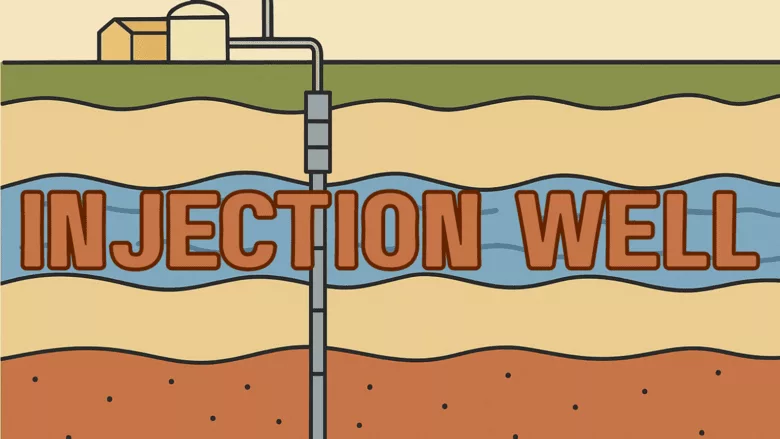
Image via Canva Pro
Despite the EPA awarding over $12.7 million in grants to support state and tribal underground injection control (UIC) programs, funding for FY2025 is set to drop by $17,000 compared to FY2024.
On July 31, 2925, the EPA issued the press release “EPA Announces $12 Million to Protect Underground Sources of Drinking Water through State and Tribal Programs” that says $12 million in grant funding for states and tribes to develop UIC programs has been allocated.
EPA says the allocation to the states and tribes is based on population, geographic area, extent of underground injection practices, and other relevant factors. However, the EPA did not provide specifics on why funding for UIC grants was reduced for FY2025 compared to FY2024. EPA does say the total annual amount of the grant funding varies slightly, but is approximately $12 million per year.
An injection well is used to inject fluids underground into porous and permeable geologic formations, and wide use of injection wells began in the 1930s to dispose of the unwanted brine generated during oil production. By injecting this liquid waste into underground wells, petroleum companies were able to dispose of it in an economical manner and preserve surface waters, such as lakes, wetlands, and streams, according to the EPA.
In the 1950s, chemical companies began using deep injection wells for their industrial waste, and injection wells are currently found in all 50 states, territories, and tribal lands and are used by a variety of industries, including oil, pharmaceutical, and wastewater treatment, the EPA says.
During FY2022, EPA inventoried U.S injection wells documenting more than 800,000 such wells that are used for a variety of purposes beyond disposing and storing industrial liquid waste, such as for storing carbon dioxide and enhancing oil production. As half of the U.S. population relies on groundwater for domestic uses, such as for drinking and irrigation, in 1974 Congress enacted the Safe Drinking Water Act, which included requirements for the EPA to promulgate regulations to protect drinking water sources from contamination by underground injection. To address those requirements, the EPA established the UIC program instituting rules that regulate the construction, operation, permitting and closure of injection wells, according to the agency.
The EPA’s UIC program categorizes injection wells into one of six classes based on the type and depth of the injection activity, as well as its potential to endanger an underground source of drinking water, and each class of injection well has distinct requirements, rules, and regulations that well owners and operators must follow.
The EPA’s FY2025 appropriations for UIC programs by agency region, state, territory, and tribal allocations are:
- Region 1: Connecticut, $59,000; Massachusetts, $72,000; Maine, $66,000; New Hampshire, $86,000; Rhode Island, $53,000; Vermont, $55,000; and a tribal allocation of $9,000.
- Region 2: New Jersey, $76,000; New York, $227,000; Puerto Rico, $67,000; and the U.S. Virgin Islands, $30,000.
- Region 3: the District of Columbia, $37,000; Delaware, $48,000; Maryland, $97,000; Pennsylvania, $224,000; Virginia, $135,000; and West Virginia, $139,000.
- Region 4: Alabama, $135,000; Florida, $339,000; Georgia, $121,000; Kentucky, $276,000; Mississippi, $212,000; North Carolina, $126,000; South Carolina, $121,000; Tennessee, $105,000; and a tribal allocation of $95,000.
- Region 5: Illinois, $429,000; Indiana, $248,000; Michigan, $310,000; Minnesota, $88,000; Ohio, $348,000; Wisconsin, $78,000; and a tribal allocation of $106,000.
- Region 6: Arkansas, $185,000; Louisiana, $404,000; New Mexico, $322,000; Oklahoma, $376,000; Texas, $1,196,000; and a tribal allocation of $306,000.
- Region 7: Iowa, $93,000; Kansas, $560,000; Missouri, $159,000; Nebraska, $204,000; and a tribal allocation of $19,000.
- Region 8: Colorado, $232,000; Montana, $189,000; North Dakota, $202,000; South Dakota, $185,000; Utah, $194,000; Wyoming, $403,000; and a tribal allocation of $175,000; as well as an additional $45,000 allocated to the Fort Peck Indian Reservation.
- Region 9: American Samoa, $28,000; Arizona, $205,000; California, $801,000; Guam, $37,000; Hawaii, $73,000; Northern Mariana Islands, $29,000; Nevada, $93,000; and a tribal allocation of $51,000; as well as an additional $96,000 allocated to the Navajo Nation.
- Region 10: Alaska, $265,000; Idaho, $115,000; Oregon, $145,000; Washington state, $175,000; and a tribal allocation of $98,000.
EPA advises those planning to file a UIC grant application to contact their regional office for application information. Furthermore, EPA says the funding can be used to provide training to develop and expand the capability of state and tribal UIC and source water protection (SWP) programs to improve the capability of states and tribes to protect drinking water sources and public health.
The EPA says the scope of that work includes: providing leadership and support to states and tribes on emerging and/or high priority UIC and SWP issues; sponsoring annual meetings for UIC and SWP programs; supporting and encouraging state and tribal participation in the UIC data application; developing and delivering training for UIC regulators; sharing information with states, tribes, and other stakeholders; and additional project elements as identified by the successful applicant.
Looking for a reprint of this article?
From high-res PDFs to custom plaques, order your copy today!

.webp?height=200&t=1774923773&width=200 "Mergers (2).png")