How Tech is Revolutionizing Construction from the Ground Up
AI platforms are being used to analyze historical project data among other things.

Image via Zhao Jiankang from Getty Images Pro
In an industry long defined by heavy equipment, steel beams, and a whole lot of concrete dust, a quiet but powerful transformation is underway.
From AI-powered planning to robotic drilling rigs, technology is revolutionizing the construction industry from foundation to finish. Once considered slow to digitize, construction is now one of the most rapidly evolving sectors — embracing innovation to build smarter, faster, and greener.
Welcome to the new age of construction — where cloud data meets jobsite dirt.
From Gut Instinct to Algorithms: AI in Project Planning
Project planning in construction used to involve a mix of spreadsheets, phone calls, and a bit of crossed-fingers optimism. Now, artificial intelligence is changing that narrative.
AI platforms are being used to analyze historical project data, predict weather-related delays, and even optimize equipment deployment — including drilling rigs. With deep learning models, project managers can now estimate the best time and location for geotechnical drilling or utility boring with far greater accuracy.
McKinsey reports that AI-driven project planning can reduce construction costs by up to 15% and project timelines by 20%, simply by improving how jobs are scoped, sequenced, and staffed.
Once synonymous with cookie-cutter designs, modular construction has grown into a high-tech powerhouse. Buildings are now prefabricated in climate-controlled factories and assembled on-site — slashing construction time by 30-50%, according to the Modular Building Institute.
Off-site construction also reduces the need for repetitive drilling and excavation, particularly for foundations and service lines, since precision pre-planning eliminates a lot of field improvisation. It’s not just efficient — it’s cleaner, safer, and less disruptive to the environment.
Drills, Drones, and Automation on the Jobsite
While drones continue to scan job sites and monitor safety from above, automated drilling systems are reshaping what happens underground.
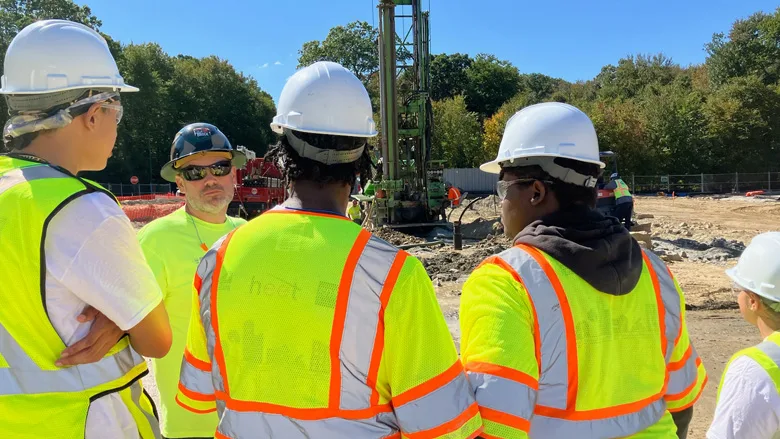
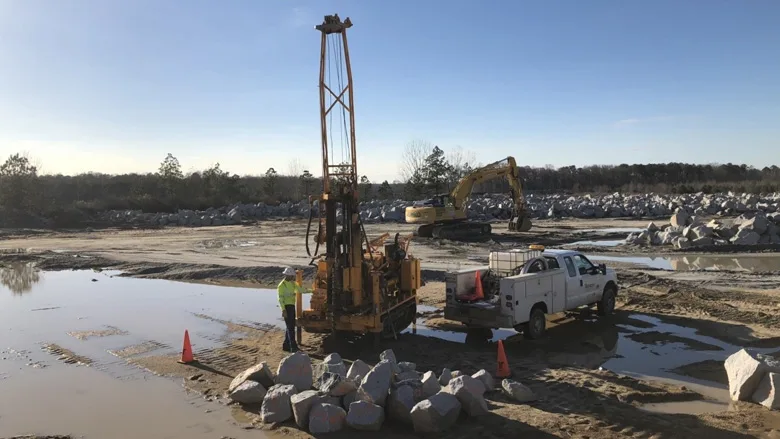
Modern directional drilling rigs can now be guided with centimeter-level precision using GPS and real-time telemetry. In tunnel boring and foundation work, smart drills equipped with sensors can adapt in real time to changes in soil density or moisture levels — helping crews avoid blowouts, delays, and costly rework.
The global automated drilling market is projected to grow to $4.3 billion by 2030, driven by demand in construction, mining, and utility installation.
Meanwhile, robotic systems are handling everything from rebar tying to 3D concrete printing. It’s not about replacing workers — it’s about reducing strain, enhancing safety, and keeping projects on schedule when skilled labor is in short supply.
Recently, we highlighted an autonomous mining rig and an AI-geology estimator.
Green Materials, Cleaner Drilling and Net-Zero Goals
As the industry shifts toward net-zero emissions, drilling technologies are adapting too. Traditional diesel-powered drills are being replaced by electric and hybrid alternatives, significantly reducing the carbon footprint of foundation work and underground utilities.
In geothermal and deep foundation projects, advanced drilling techniques are helping to deploy more sustainable energy systems. Geothermal heat pump installations, which require precise boreholes, are on the rise — supported by tax credits and clean energy incentives.
The materials side is seeing innovation too: carbon-capturing concrete, low-emission insulation, and mass timber are gaining traction. Pair these with smarter drilling and construction processes, and the environmental impact of building shrinks drastically.
Smart Helmets, Jobsite Apps, and Real-Time Data
It’s not just the machines getting smarter — it’s the workers, too. Augmented reality (AR) helmets now allow drill rig operators and excavation crews to visualize utility lines and drill paths without guesswork. It's still rare on most jobsites, but the ones that do see a drop in errors, a reduction in safety incidents, and ensured compliance with increasingly strict environmental and zoning regulations.
Meanwhile, cloud-connected apps allow project managers to monitor active drilling operations, material deliveries, and equipment maintenance from a single dashboard — whether they’re on site or halfway around the world.
Construction is still a boots-on-the-ground industry. But the boots are smarter, the machinery is automated, and even the drilling rigs are part of the digital ecosystem. From vertical integration and AI planning to smart drills and sustainable materials, the sector is being rebuilt from the inside out.
The blueprint has changed. Today, construction isn’t just about what you build — it’s about how you build it, and the technology that makes it possible.
Looking for a reprint of this article?
From high-res PDFs to custom plaques, order your copy today!

John Oldani is an editor, journalist, and reporter with over a decade of experience producing clear, engaging, and well-researched content. He holds a Bachelor of Arts in Journalism from Oakland University, with a focus on financial reporting, editing, and long-form writing. Over the past year, John has specialized in covering the drilling industry, reporting on key developments, policy shifts, and impactful stories shaping the field.
email: johnnyoldaniwords@gmail.com | office: (248) 838-8535