Environmental News
EPA Proposes Easing Diesel Emissions from Highway and Nonroad Engines
Industry and environmental groups list problems they have with the proposed changes
The Environmental Protection Agency (EPA) issued a proposed rule that would ease federal regulations required by the Clean Air Act (CAA) that govern emissions from both mobile and stationary diesel-powered engines, which has elicited strong responses from both industry and environmental groups with both sides listing problems they have with the proposed rule.
In a written statement, the Truck and Engine Manufacturers Association (EMA) said the proposed rule would negatively impact the production of model year (MY) 2027 engines, and open a “Pandora’s Box” in which “no federal agency should feel unilaterally empowered to move the regulatory finish line well after the regulated industry’s march toward compliance has begun.”
Also criticizing the EPA’s action, but from a different perspective, is Mark Drajem of the Natural Resources Defense Council (NRDC). Drajem told The Driller, the EPA’s proposal would result in “wiping away decades of progress in emissions reductions that EPA NOx (nitrogen oxides) standards have achieved.”
The EPA’s proposed rule—Amendments and Nonconformance Penalties for Model Year 2027 and Later Heavy-Duty Highway Engines and Amendments to Inducement Provisions for SCR-Equipped Diesel Engines—was published in the Federal Register on July 14, 2026, and it seeks “regulatory amendments to certain compliance provisions and test procedures related to model year (MY) 2027 and later heavy-duty highway engines. These amendments would include changes to the regulatory useful life periods and the emission-related warranty periods.
“The EPA also proposes to add clarity to certain regulatory compliance provisions and correct errors in the regulations to support the MY 2027 and later program for heavy-duty highway engines and vehicles. This includes certain amendments related to provisions adopted in January 2023 as well as other provisions adopted in earlier rules.
“The EPA also proposes to make nonconformance penalties (NCPs) available to manufacturers of medium heavy-duty engines (medium HDE) and heavy heavy-duty engines (heavy HDE) beginning in MY 2027. In addition, the EPA proposes to amend the requirements for selective catalytic reduction (SCR) system inducement provisions for newly manufactured diesel-fueled highway engines and vehicles ( i.e., light- and medium-duty vehicles and heavy-duty engines) and nonroad engines and equipment. The EPA is also considering new inducement guidance for in-use highway and nonroad diesel engines, vehicles, and equipment,” the proposed rule says.
In a written statement, the EPA said the proposed rule “does not alter emission standards or weaken environmental protections. EPA’s air permitting partners would still be required to meet all applicable statutory and regulatory requirements to maintain the utmost human health and environmental protections. This includes ensuring that all permitted sources comply with applicable air quality requirements, including national ambient air quality standards.”
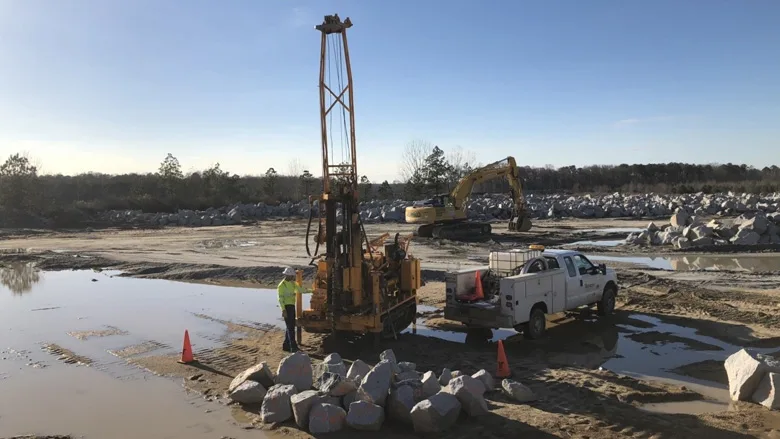
While the EPA has focused the proposed rule on trucks and other highway engines saying the changes will save truckers about $6,000 per year, the proposed rule also covers nonroad engines and equipment (which would impact drilling operations), Under the proposed rule, “construction of new minor stationary sources and modifications of existing stationary sources are regulated through the CAA minor new source review (NSR) programs. New stationary sources are considered ‘minor’ if they do not have the potential to emit air pollutants in amounts equal to or exceeding the ‘major source’ statutory thresholds within CAA title I,” EPA said.
Furthermore, “modifications at existing major stationary sources are considered ‘minor’ if they do not increase emissions by amounts equal to or exceeding the significant emissions rates in NSR regulations. Modifications at existing minor stationary sources are considered ‘minor’ if they do not increase emissions by amounts equal to or exceeding the ‘major source’ statutory thresholds within CAA title I.”
The EPA accepted comments on the proposed rule until Aug. 13, 2026, and the EMA filed such comments in which they urged the EPA to make changes to the proposed rule and “fashion a final rule that can meet the broader goal at issue –– to build a cost-effective and accessible regulatory bridge to a zero-emissions vehicle (ZEV)-truck.
“To that end, the agency will need to finalize just one set of HDE low-NOx standards to take effect in MY 2027, not multiple regulatory steps with multiple standards phasing-in through 2031 and beyond.” If the EPA declines to do so, a situation can be created where the low-NOx program for diesel engines will overlap with and undermine the implementation of the “Phase 3” Green House Gas (GHG) Emission Standards for Heavy-Duty Vehicles, the EMA said.
Because the “Phase 3” GHG emission standards for heavy-duty vehicles are slated to lead to the broader transition to ZEV trucks, and the proposed rule will cause the original equipment manufacturer to divert limited research and development resources to multiple iterations of diesel engine enhancements instead of focusing those resources on the needed advancements in HD ZEV technologies, said the EMA, which added “all stakeholders recognize that diesel technologies will start to phase-out over the next decade. The scope and costs of this rulemaking need to account for and reflect that reality as well.”
Moving away from the direct costs associated with the proposed rule, environmental groups such as the NRDC, the Sierra Club, the Center for Biological Diversity; the Environmental Law & Policy Center; the Conservation Law Foundation; Earthjustice; and the Environmental Defense Fund (EDF) banded together to file joint comments focused on public health and the environment.
The 135 page document says “the proposal unlawfully abdicates EPA’s statutory duty to protect public health and the environment from dangerous vehicle emissions. The proposal is also based on inadequately explained, unsupported, and unreasonable factual findings and conclusions that render it arbitrary and capricious. Furthermore, EPA’s rulemaking process fails to comply with the procedural requirements of the Clean Air Act and multiple executive orders.
“EPA’s proposal will cause immense harm to public health and welfare, the very interests EPA is tasked with protecting. By keeping the numeric standard the same, it might appear as though EPA has only made small changes around the edges of the 2023 rule; but in reality, these changes amount to a wholesale destruction of three decades of emission improvements, likely resulting in vehicle pollution levels Americans have not experienced since the 1990s.
“The removal of any derates from diesel engines—the primary mechanism of ensuring compliance with emission requirements—will encourage noncompliance and tampering with emission controls on vehicles and will leave no real backstop to ensure emissions equipment is properly functioning and the equipment has an adequate supply of DEF. Without DEF, emissions from diesel vehicles will increase not by a few percentages but by as much as 100 times. And yet, EPA made no attempt to measure how these changes would increase NOx emissions and or harm Americans,” the joint comments say.
In addition, EDF spokesperson Sharyn Stein told The Driller the comments cover nonroad engines, with the comments saying, “EPA's 2020 National Emissions Inventory (NEI) shows that nonroad vehicles account for almost 10 percent of all NOx emissions in the United States. Further, nonroad vehicles were responsible for more than a quarter of total NOx emissions across 292 counties. By failing to consider the increase in NOx pollution that will occur from abandoning mandatory derates for nonroad equipment, EPA is endangering public health-particularly in communities with higher proportions of nonroad vehicle emissions.”
Furthermore, the document challenges the rulemaking process used to develop the proposed rule. It says, “EPA’s rulemaking process fails to comply with basic procedural requirements” of the CAA, the Administrative Procedure Act (APA), and multiple executive orders. EPA has denied stakeholders an adequate and meaningful opportunity to engage in this consequential rulemaking process, as well as the consultation and analysis guaranteed by executive order.”
Looking for a reprint of this article?
From high-res PDFs to custom plaques, order your copy today!