Water Policy News
Senate Bill Supporting Aquifer Research Opposed by U.S. Geological Survey
Bills would increase drilling for geothermal, supports demonstration projects
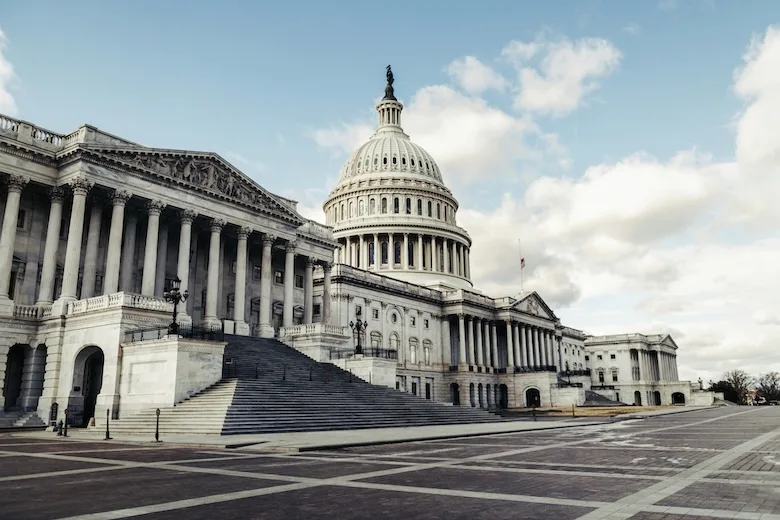
Senate bills that support water programs and projects were presented to the Senate Committee on Energy and Natural Resources at a hearing on the proposed legislation held on Sept. 16, 2026, and during that hearing a federal agency witness said her agency opposes an aquifer-focused bill because it would add research tasks to the agency.
While there was bipartisan support for the water bills among the senators, Sarah Ryker, the associate director of the U.S. Geological Survey’s Geology, Energy, and Minerals Mission Area, said the Department of the Interior (DOI) does not support the bill, S. 4846, the Transboundary Aquifer Assessment Program Act (the TAAP Act).
Introduced by Sens. Mark Kelly (D-Ariz.) and John Cornyn (R-Texas), the TAAP Act, would amend the United States-Mexico Transboundary Aquifer Assessment Act to reauthorize and fund the U.S.-Mexico TAAP, which is a bi-national agreement between the two countries under which joint scientific research is conducted on underground water resources shared by the U.S. and Mexico.
Ryker said not only would S. 4846 reauthorize TAAP, but it would expand the program to include additional priority aquifers underlying Arizona. Because “the USGS is focusing its efforts on higher priority operational responsibilities,” including the Earth Mapping Resources Initiative (Earth MRI), DOI “does not support reauthorization of TAAP,” Ryker said.
Neither Sens. Kelly nor Cornyn appeared before the committee to testify on the TAAP Act, but when the bill was introduced Cornyn issued the following statement that, in part, reads: “Transboundary aquifers are essential to the success of our nation’s agriculture industry and vital to the wellbeing of Texans living along certain portions of the U.S.-Mexico border, but we don’t have all of the information we need to responsibly utilize this critical water source, By reauthorizing the United States-Mexico Transboundary Aquifer Assessment Program, we will be able to ensure access to these aquifers so they can support communities for years to come.”
The other water-related bills considered by the committee are:
- S. 4489, the Dry-Redwater Regional Water Authorization Act, would authorize the Dry-Redwater Regional Water Authority System in Montana and North Dakota that would allocate $602 million from federal fiscal years 2027 through 2037 for planning, design, and construction of a clean, reliable municipal, rural, and industrial water system sourced from the Missouri River, serving over 30,000 residents, farms, ranches, schools, and clinics. S. 4489 was introduced by Sen. Steve Daines (R-Mont.).
- S. 5352, the Desalination Reauthorization Act, would amend the Water Infrastructure Improvements for the Nation Act and the Water Desalination Act of 1996 to reauthorize certain desalination programs. S. 5352 was introduced by Sen. Alex Padilla (D-Calif.)
- S. 5402, the Western Water Reinvestment Act, would extend authorizations for aquatic ecosystem restoration projects, multi-benefit watershed health projects, and WaterSMART grants provided by the Bureau of Reclamation to help communities conserve water, improve energy efficiency, and build long-term resilience to drought. S. 5402 was introduced by Sens. Ron Wyden (D-Ore.) and Jeff Merkley. (D-Ore.)
Sen. Daines, who testified at the hearing, said the Redwater Regional Water Authorization Act will authorize the construction of critical water systems in eastern Montana and provide clean drinking water to the Montanan counties of Dawson, Garfield, Macomb, Prairie, and Richland as well as McKenzie County in North Dakota. Daines added he has been working on the bill because water coming out of some faucets in Macomb County is full sediments. “You’d never want to think about pouring that out of your faucet and taking a sip of water from it,” he said.
Sen. Padilla, who testified at the hearing, said the Desalinization Reauthorization Act is needed because “there’s many barriers to meeting our water needs in the west.” S. 5352 “tries to tackle at least the time challenge for these types of projects,” said Padilla who added, “Even when we know we need these projects, and technology is proven, the process for authorization and funding can take not just years, sometimes a decade or more.” The bill seeks to “streamlines the process by reauthorizing and expanding programmatic approvals for the Bureau of Reclamation water supply projects” rather than “requiring project by project authorization through Congress, the bill provides a predictable, transparent pathway for authorizing and for funding.”
Neither Sens. Wyden nor Merkley appeared before the committee to discuss S. 5402, but when the bill was introduced Wyden issued a statement that, in part, reads: “Water scarcity in the West isn’t a question of if, it’s when. The federal government needs to get serious about protecting water resources before it’s too late, and my legislation will help Oregon’s farmers and producers remain even more resilient against growing drought conditions.”
No votes were taken on the bills, and as of press time it was unknown when—or if—they will be forwarded to the Senate Committee on Rules, which is a routine step that establishes rules for debate on proposed legislation before they are sent to the full Senate to be voted on.
Looking for a reprint of this article?
From high-res PDFs to custom plaques, order your copy today!