Water Policy News
EPA’s Water Reuse Action Plan Expected to Cut Industrial Discharges of PFAS Substances
The new plan includes a list of more than 180 state reuse regulations, guidelines compiled by EPA
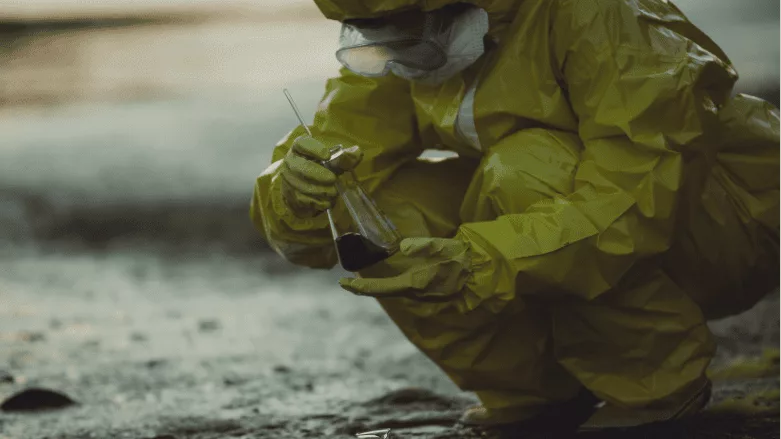
Image via LukaTDB from Getty Images Signature
More details on the latest version of the Environmental Protection Agency’s (EPA) National Water Reuse Action Plan (WRAP 2.0), as well as the positive impact WRAP 2.0 is expected to have on water quality by reducing industrial discharges of Per- and polyfluoroalkyl (PFAS) substances, were provided by EPA officials during a recent Webcast hosted by the WateReuse Association.
The Webcast—Overview of WRAP 2.0—was held Sept. 9, 2026, during which Sydney Cunniff, an environmental engineer for the EPA’s Office of Water, Water Reuse and Conservation Branch, said WRAP 2.0 initiatives are expected to reduce industrial discharges of Per- and polyfluoroalkyl (PFAS) substances.
During the Webcast, Cunniff cited a white paper on PFAS treatment technologies and policy outlook produced by the U.S. Chamber of Commerce. The white paper evaluates the technology landscape related to monitoring, treatment, disposal, and destruction of PFAS, and the implications for industrial water reuse, which is in line with WRAP 2.0, specifically the component of WRAP 2.0 focused on reuse for resurgent domestic industry.
Because “many American industries need reliable water supply to achieve full potential” to manufacture items including “batteries, finished products such as food and beverages, cars and trucks, and (for) agriculture,” the relaunched WRAP is “structured around four key initiatives,” with “the four areas supporting (water) reuse for domestic industry,” Cunniff said.
EPA issued WRAP 1.0 (the original WRAP) on Feb. 27, 2020, and it was described as a framework designed to expand and advance water reuse across the U.S. in order to “build secure, sustainable, and resilient water supplies for communities, agriculture, industry, and ecosystems.” To achieve those goals, WRAP 1.0 listed strategies such as enhancing coordination across water, energy, and agricultural sectors; improving scientific understanding and data access; fostering financing and supportive policies for recycling infrastructure; and promoting public education and outreach regarding the safety and benefits of recycled water.
 Courtesy / Engin Akyurt on Unsplash
Among the changes found in WRAP 2.0 includes shunning the imposition of federal mandates in favor of partnerships with states, tribes, and more than 200 public and private sector entities to drive water reuse, said Sargon de Jesus, a physical scientist with EPA who participated in the Webcast. Furthermore, “the relaunch of WRAP 2.0 was structured around four key initiatives,” he said. Those initiatives are:
- Strengthen coordination between federal agencies, states, and local utilities, which is a approach known as “cooperative federalism,” and which relies on aligning with existing authorities and working with industry to accelerate reuse solutions.
- Address ways to advance the use of reclaimed water for electricity generation, power plants, and finding ways to advance the reuse of wastewater from oil and gas production, known as produced water.
- Foster economic growth and environmental protection by converting wastewater into a resource that industries can use and which is expected to reduce costs, limit discharges, and support expansion in sectors like energy and manufacturing.
- Provide reliable water supplies to data centers and to semiconductor manufacturers, both of which require large volumes of water for cooling and operations, in order to expand artificial-intelligence related infrastructure. WRAP2.0 frames water reuse as a way to meet that demand without further straining freshwater sources.
“This is not a comprehensive list,” said de Jesus who added, as industries “implement recycled water” into their production processes, they are finding “their operations are water-heavy.” Which shows “we’re really just at the tip of the iceberg in terms of the products and tools that will come out of this latest push and renewal in the WRAP,” he said.
Of course using recycled water requires the water be treated to make it safe for “its intended use,” said de Jesus who gave the example of turning wastewater into drinking water. If wastewater is to be used for drinking, that water will have to go through “a lot of treatment to make it safe enough for consumption,” he said. But if the wastewater is going to be used for golf course or landscape irrigation, the water would need less treatment. “So properly matching the treatment with the source and the application can save costs in terms of infrastructure and treatment and energy while still protecting public health,” he said.
In order to achieve those goals, the EPA “works to develop treatment thresholds for different reuse applications, so that there is an informed basis as to how much treatment is needed, and potentially projects don’t have to over-treat the water where it doesn’t make sense for an intended use,” de Jesus said.
 Courtesy / Lukas from Pexels
However, while the EPA develops treatment thresholds, “there are no federal regulations on water reuse,” said de Jesus, who added, “it’s states and tribes that set the treatment goals for water reuse, not the EPA” which has created “a patchwork of regulations for different source waters and end uses, and so that can be very, very confusing and difficult to navigate,” he said.
To help reduce any confusion, the EPA has “compiled more than 180 state reuse regulations and guidelines across 38 different states,” and “created plain language summaries for all of these regulations,” according to de Jesus.
Furthermore, EPA identified “the critical material” in those regulations and guidelines such as the “technical basis, and the treatment and monitoring requirements” and ensured those sections are in the summaries, de Jesus said. EPA further “packaged that (information) into a searchable tool” called the “Regulations and End-Use Specifications Explorer (REUSExplorer)” that is designed to enable users to “filter those summaries based on location, based on the source of water, and based on the end use.” The focus on location, source and end use is “intended to help practitioners, help states and tribes understand the approaches of other jurisdictions,” he said. Therefore, states or tribes that are interested in establishing regulations or guidelines, but they are “just getting started,” can review what other states are doing in the area of water-reuse regulation, de Jesus said.
Looking for a reprint of this article?
From high-res PDFs to custom plaques, order your copy today!