EPA Launches WRAP 2.0 to Expand Water Reuse Nationwide
Focus on AI, supply
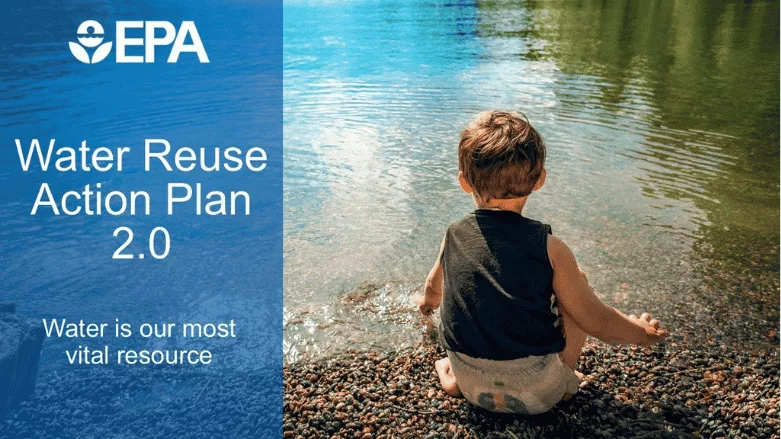
Image courtesy of the EPA
The U.S. Environmental Protection Agency has rolled out an updated national strategy aimed at scaling water reuse across industries, infrastructure, and energy systems, but questions remain about how quickly those ambitions can translate into real-world projects.
Announced April 16 by Administrator Lee Zeldin, the Water Reuse Action Plan (WRAP) 2.0 builds on earlier federal efforts to treat wastewater as a long-term supply solution, particularly as demand grows from sectors like artificial intelligence and advanced manufacturing.
At its core, the plan targets three priorities.
#1. First, WRAP 2.0 positions water reuse as a key piece of the country’s push to expand AI-related infrastructure. Federal officials say reliable water supplies will be critical for data centers and semiconductor manufacturing, both of which require large volumes of water for cooling and operations. Reuse is framed as a way to meet that demand without further straining freshwater sources. Still, large-scale reuse systems can be costly to build and energy-intensive to operate—factors that could slow adoption, especially in regions without existing infrastructure.
#2. Second, the strategy leans heavily on partnerships. EPA officials say WRAP 2.0 is designed to strengthen coordination between federal agencies, states, and local utilities; what’s often referred to as “cooperative federalism.” The approach relies on aligning existing authorities and working with industry to accelerate reuse solutions. But without new regulatory mandates or dedicated funding streams outlined in the announcement, some of that progress may depend on how willing states and utilities are to prioritize reuse on their own.
#3. Third, the plan ties water reuse to both economic growth and environmental protection. By converting wastewater into a usable resource, officials say industries can reduce costs, limit discharges, and support expansion in sectors like energy and manufacturing. At the same time, reuse projects often face public perception hurdles—especially when it comes to potable reuse, and require careful oversight to ensure water quality standards are consistently met.
The announcement took place at EPA headquarters and included remarks from Deputy Administrator David Fotouhi, Assistant Administrator for Water Jessica Kramer, and U.S. Sen. Mike Rounds, along with representatives from industry and water utilities.
Following the press conference, EPA officials and stakeholders participated in a panel discussion focused on the future of water reuse under WRAP 2.0, with speakers representing utilities, private industry, and infrastructure firms.
The updated plan reflects a broader shift in how water is managed across the country - less as a one-time-use resource, and more as something that can be treated, reused, and reintegrated into the system. Whether WRAP 2.0 can move from framework to widespread implementation, though, will likely depend on funding, local buy-in, and how quickly projects can be deployed at scale.
Looking for a reprint of this article?
From high-res PDFs to custom plaques, order your copy today!


.webp?height=200&t=1762313000&width=200 "Water testing")