When the Snow Won’t Fall, the Drones Step In
Facing drought and shrinking snowpack, ski resorts and Western states are betting millions on cloud seeding.
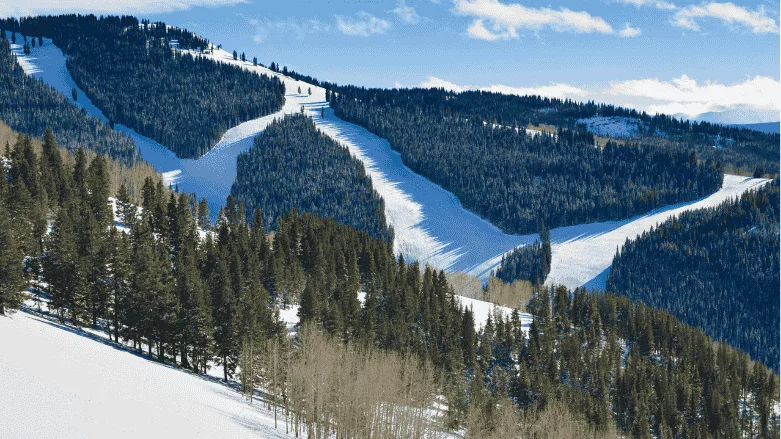
Image via Adventure_Photo from Getty Images Signature
Western ski resorts and state water agencies are increasingly turning to cloud seeding as drought continues to shrink snowpack and strain water supplies across the Rockies.
At Winter Park Resort, operators leaned heavily on cloud seeding early this season after Colorado opened with unusually dry conditions. The process uses silver iodide particles released into cold, moisture-rich clouds to encourage snow formation. Resort managers credit the technology with boosting snowfall during key holiday periods, helping keep terrain open while neighboring resorts struggled with limited natural precipitation.
The push comes as snowfall across much of the American West continues to lag behind historical averages. Vail Resorts Inc., which owns nearly 50 resorts across the U.S. and Canada, recently warned that weak snowfall hurt terrain openings and visitor spending this season.
Cloud seeding isn’t new, but the scale of investment is growing fast. For decades, programs across the West have been operated by research groups like the Desert Research Institute, which runs seeding operations in multiple states. The institute estimates that at Winter Park alone, cloud seeding added roughly two feet of snow during the 2022–2023 season, about 13% of the resort’s total snowfall that year.
The main motivation goes well beyond skiing. Snowpack feeds rivers and reservoirs that millions rely on for drinking water, agriculture, and wildfire control. As drought damages across the U.S. have climbed into the billions annually, states have increasingly viewed cloud seeding as a relatively low-cost way to squeeze more water out of winter storms.
Private startups are now accelerating the effort. Rainmaker Technology Corp. has introduced drone-based cloud seeding systems that fly directly into storm clouds, releasing silver iodide more precisely than older ground-based burners. The company currently operates about 100 drones across Western states.
Utah has become one of the most aggressive adopters, paying Rainmaker $7.5 million this winter as part of a major expansion aimed at boosting snowfall and helping refill the Great Salt Lake. The state has also committed millions more to expand nearly 200 cloud seeding generators across mountainous regions.
Other states are watching closely. The Colorado Water Conservation Board is upgrading its aging ground-based seeding equipment with remote-controlled systems that can operate in higher, colder locations where storms are more likely to produce snow. Officials estimate seeding could increase precipitation by 8% to 12% per storm.
Not everyone is convinced the results justify the growing hype.
Researchers at the University of Colorado and elsewhere acknowledge cloud seeding can trigger snowfall under the right conditions, but say real-world storms are chaotic and difficult to measure accurately. While laboratory and controlled experiments have shown clear effects, proving how much additional snow falls in natural storms remains challenging.
Some scientists argue the technology is being deployed faster than the evidence supporting its effectiveness. Wind patterns, cloud composition, and temperature shifts can all affect whether silver iodide actually influences precipitation beyond what would have happened naturally.
Still, cloud seeding remains attractive because of its price. State officials estimate producing an acre-foot of water through seeding can cost around $30, compared with roughly $1,000 for desalination or water recycling projects. Traditional snowmaking systems at ski resorts are also more expensive and consume large volumes of water without adding to regional water supplies.
While Snowbird Resort has contracted with Rainmaker, some resorts like Vail have shifted fully toward high-tech snowmaking equipment instead of seeding programs. Colorado is even positioning seeding systems near resorts such as Powder Mountain and Snowbasin Resort to demonstrate potential benefits in hopes of gaining future buy-in.
The growing use of cloud seeding has also sparked political backlash and conspiracy claims, with proposed bans surfacing in multiple states despite a lack of evidence that the practice causes environmental harm.
For now, as drought tightens its grip on the West, ski resorts and water managers are willing to gamble on clouds. Whether cloud seeding becomes a long-term climate tool or a temporary drought-era experiment will likely depend on whether ongoing studies can finally prove how much snow — and water — it truly adds to the system.
Looking for a reprint of this article?
From high-res PDFs to custom plaques, order your copy today!