Hula Lakeside: How Geothermal Energy Is Redefining Workspaces in Vermont
From an Old Factory to a Very Green Future
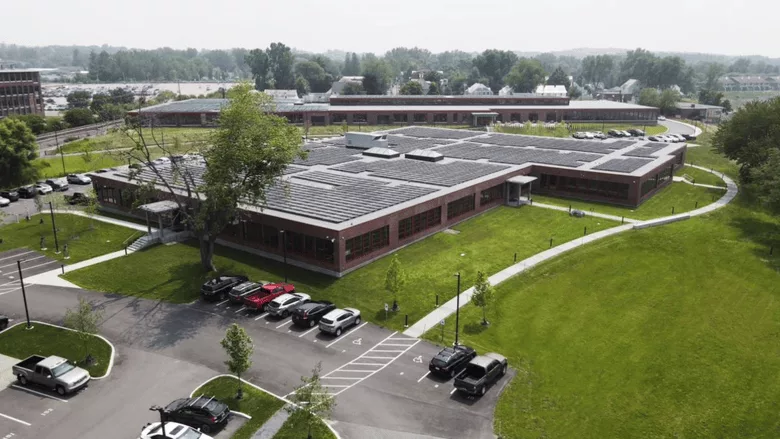
Image Courtesy of Hula
What was once a natural-gas–heated oven factory along the shores of Lake Champlain has been reborn as Hula; a state-of-the-art coworking campus and business incubator. Since opening in 2020, Hula has quickly become Burlington’s premier technology-driven workspace, and a living model for how old buildings can cut carbon emissions without sacrificing comfort or creativity.
The redevelopment team, working closely with Burlington Electric Department (BED), transformed the decades-old factory into a high-performance campus powered by renewable systems. Instead of oil, gas, or wood, Hula now runs on an open-loop geothermal well system paired with ground-source heat pumps to provide all its heating, cooling, and hot water needs.
Geothermal systems tap into the Earth’s consistent underground temperatures to regulate indoor climates year-round. By circulating water through underground loops, heat pumps move warmth inside during winter and push it back underground in summer. The result is steady, reliable, and renewable energy that doesn’t deplete with use.
Inside, dozens of small-scale heat pumps work together to move warm and cool air throughout the building. If one side of the building heats up under direct sunlight, for instance, the system redistributes that solar warmth to shaded areas before drawing from the ground loop for any extra heat.
At Hula, this geothermal setup works in harmony with rooftop solar panels, kitchen exhaust heat capture, and efficient building design, from a tightly air-sealed shell and high insulation to a 93%+ energy recovery ventilation (ERV) system and advanced energy management controls. Together, these features allow Hula to operate using only a fraction of the energy required by similar-sized facilities.
And the results speak for themselves: Hula’s energy use intensity (EUI) is roughly 65% lower than Vermont’s energy efficiency code requires. That performance earned the campus the “Best of the Best” award for Commercial Building Design & Construction at the 2022 Better Buildings by Design energy conference.
Beyond the numbers, Hula has become a blueprint for what’s possible when design, technology, and local commitment come together. It shows that even existing industrial buildings can be decarbonized, without waiting for mandates or massive subsidies.
Adam Aguirre from Conservation Law Foundation told The Driller this: “It’s wonderful to see a community hub like Hula Lakeside embracing renewable energy solutions like these geothermal systems. These systems can save money and provide clean heating and cooling to the families and businesses that use them.”
Today, Hula spans two buildings, with more expansion on the horizon. It’s proof that the future of clean, renewable, and resilient infrastructure isn’t far off, it’s already happening on the shores of Lake Champlain.
Looking for a reprint of this article?
From high-res PDFs to custom plaques, order your copy today!

John Oldani is an editor, journalist, and reporter with over a decade of experience producing clear, engaging, and well-researched content. He holds a Bachelor of Arts in Journalism from Oakland University, with a focus on financial reporting, editing, and long-form writing. Over the past year, John has specialized in covering the drilling industry, reporting on key developments, policy shifts, and impactful stories shaping the field.
email: johnnyoldaniwords@gmail.com | office: (248) 838-8535