
Jetson Launches Jetson Air Heat Pump in Bid to Cut Costs
It's part of a broader effort to reduce the financial and logistical barriers that have long hindered heat pump adoption in North America.
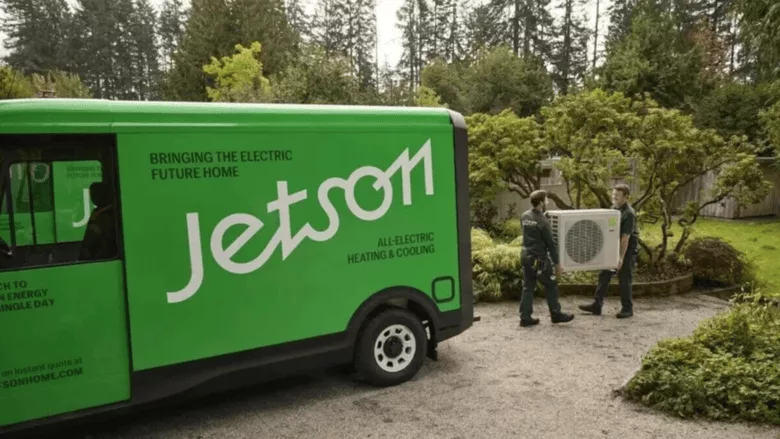
Image via Jetson
Jetson, a Canadian startup specializing in home electrification, has unveiled its first proprietary heat pump, the Jetson Air — part of a broader effort to reduce the financial and logistical barriers that have long hindered heat pump adoption in North America.
The new product launch comes as the company expands its footprint across the U.S. and Canada, with nearly 1,000 installations already completed in Colorado, Massachusetts, and British Columbia. Jetson plans to enter the New York market in the coming weeks.
A High-Efficiency Alternative to Traditional HVAC Systems
Heat pumps are widely regarded as a cleaner and more energy-efficient alternative to traditional gas- or oil-fired HVAC systems. However, the upfront cost of installation — often between $25,000 and $30,000 for whole-home systems — remains a significant obstacle for many homeowners.
Jetson says it has found a way to bring that number down. By eliminating middlemen through a vertically integrated model, the company reports an average installed cost of around $15,000. In some areas, after factoring in available rebates and incentives, that figure drops to as low as $5,000.
Unlike conventional HVAC providers, Jetson handles all aspects of the process in-house — from sourcing and warehousing the equipment to system design and installation. The company also uses its own electric service vehicles and proprietary software to remotely assess customer needs, significantly reducing the time and cost typically required for on-site evaluations.
Tech-Forward System Designed for Cold Climates
The Jetson Air heat pump is designed to operate efficiently in cold climates, with performance ratings down to -22°F. It includes integrated sensors and software that allow for real-time system monitoring and remote diagnostics. Homeowners can schedule heating and cooling cycles based on electricity rates and grid demand, potentially lowering utility costs and easing stress on the energy system.
This approach reflects a growing trend in the HVAC industry: the blending of hardware with software to improve efficiency, streamline maintenance, and enhance user control.
Jetson’s model also responds to broader environmental and policy shifts. According to recent data, over 80 million homes in the U.S. and Canada still rely on fossil fuels for heating. Replacing a gas furnace with a heat pump can reduce household carbon emissions by up to 6 metric tons per year — roughly equivalent to the emissions savings of switching from a gas-powered car to an EV.
As governments begin to scale back subsidies and tax credits for home electrification, Jetson’s focus on upfront affordability and operational simplicity may become increasingly relevant. By embedding incentive management directly into its process, the company removes a key friction point for homeowners seeking to make the switch.
With the launch of Jetson Air, the startup is betting that a tech-savvy, all-in-one approach can help make electric heating not only viable — but preferable — for a broader range of households.
Looking for a reprint of this article?
From high-res PDFs to custom plaques, order your copy today!