Australian Startup CoilRig Gets Boost to Rethink Geothermal Drilling
The South Australian government’s Department of State Development awarded the company grants
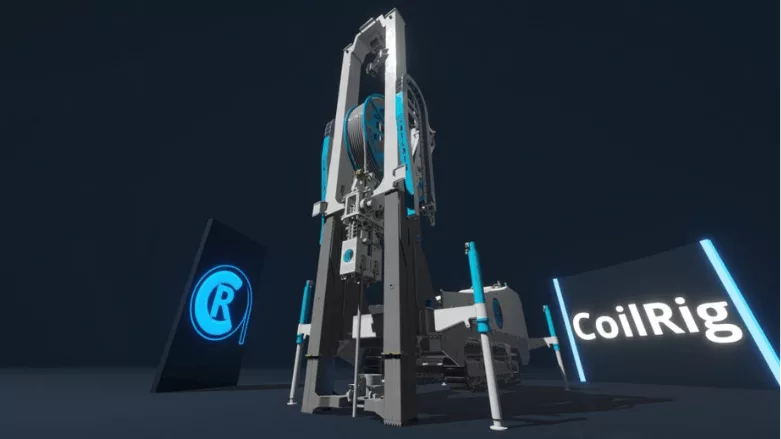
Image Courtesy of the Government of South Australia
An Adelaide-based startup is getting a financial push to keep developing a new approach to geothermal drilling — one aimed squarely at one of the industry’s biggest pain points: cost.
CoilRig, a young Australian company focused on geothermal installation technology, has secured a combined $700,000 in public funding to support development of its coiled tubing drilling rig.
The South Australian government’s Department of State Development recently awarded the company a $450,000 grant to support product development and commercialization. That follows an earlier $250,000 investment from the federal government through Australia’s Industry Growth Program.
Together, the funding is intended to move the company’s drilling concept closer to real-world deployment.
CoilRig’s approach centers on coiled tubing — a continuous drill pipe wound onto a reel that unspools during drilling.
Traditional geothermal drilling relies on connecting and disconnecting individual drill rods throughout the process. That step-by-step assembly adds time, labor, and complexity to every borehole.
Coiled tubing eliminates those repeated connections. The continuous pipe feeds directly into the borehole, streamlining the process and reducing handling.
According to the company, the design also minimizes the bending and stretching that typically wears down drilling components. That could extend tubing life significantly, lowering replacement costs for operators over time.
In geothermal heat pump projects — where drilling can account for up to half of total installation costs — even incremental efficiency gains can make a noticeable difference.
The new funding will support several next steps:
- Lab testing
- Specialized software and materials
- Field trials
- Continued engineering development
CoilRig is currently building its first prototype in Adelaide.
If testing goes as planned, that prototype will head to New York State in 2025 for simulated field trials with a U.S.-based customer — an early signal that the company is looking beyond Australia as it refines the technology. The drilling system hasn’t been developed in isolation.
CoilRig has worked alongside researchers from the University of South Australia and Minex CRC, along with other industry partners, as it moved from concept toward commercialization.
While coiled tubing has long been used in the mining sector, applying it to geothermal drilling represents a shift in how installation equipment could evolve — particularly in markets where project economics still hinge heavily on drilling costs.
Why It Matters
As geothermal heat pumps gain traction globally, the challenge has increasingly moved from proving the technology works to deploying it efficiently.
Installation costs remain one of the biggest barriers to adoption — especially in building-scale geothermal systems.
If CoilRig’s design performs as intended in testing, it could offer contractors a faster, potentially lower-cost option for installing ground loops.
For now, the focus remains on proving the concept outside the lab.
Prototype trials in 2025 will determine whether the system can translate theoretical efficiency gains into real-world performance — the step that ultimately matters most in a drilling market that rewards reliability over novelty.
Looking for a reprint of this article?
From high-res PDFs to custom plaques, order your copy today!